
Authors
Marek Różycki is a recognised subject matter expert in last-mile and parcel logistics and Managing Partner at Last Mile Experts. Veysel Isik is a specialist in Chinese e-commerce ecosystems and cross-border logistics, and a former Senior Manager at Cainiao Group and JD.com.
Introduction
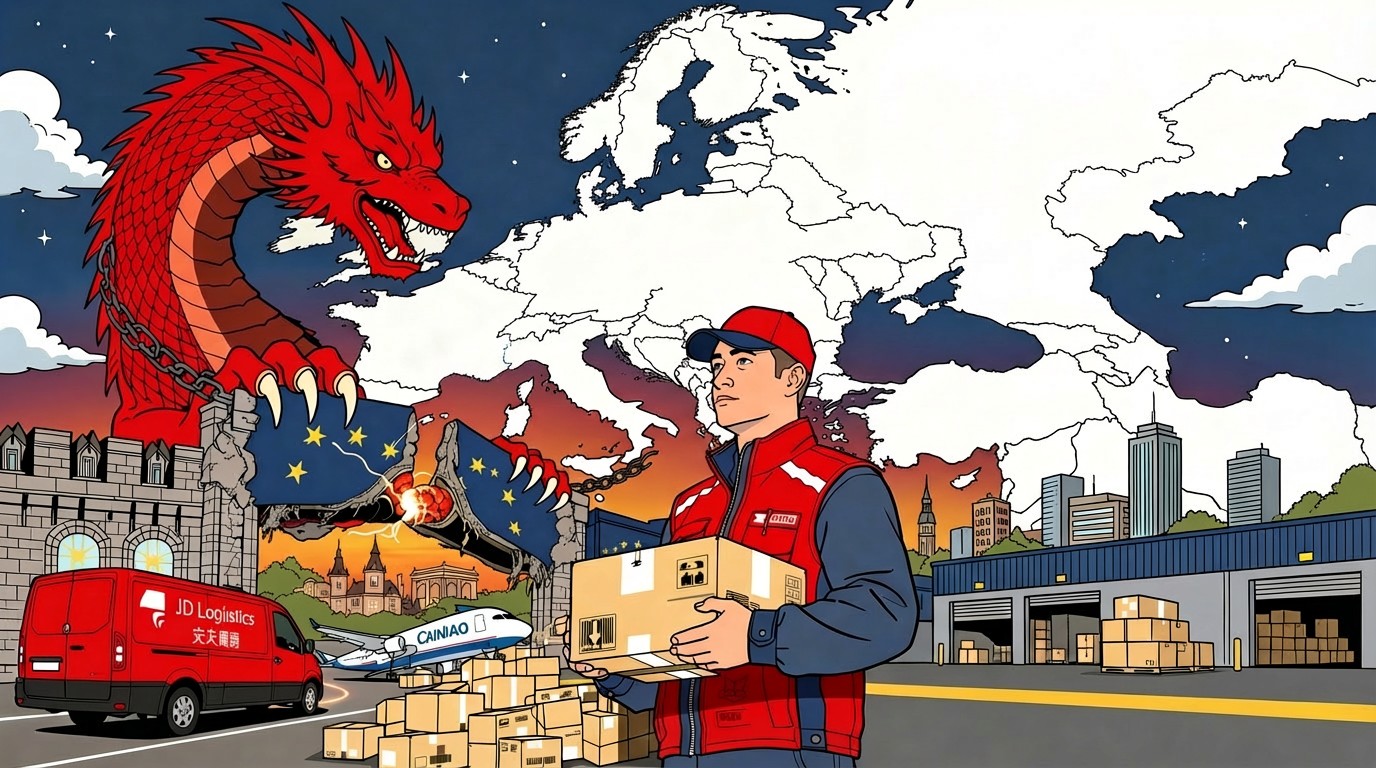
Earlier this month, the bombshell news that FedEx were part of the consortium to take over InPost dominated headlines and took over countless LinkedIn feeds. However, just days later, Chinese giant JD.com announced the launch of its own courier network, Joy Express. This was a massive development that's part of a broader trend that European players cannot underestimate. It's not so much that Chinese players are coming, more that they are already here, and are expanding their presence.
Entering new markets is never easy, though, and these new Chinese giants, no matter their size, experience, technology and expertise, still have to play their cards right. Similarly, existing European operators will have to up their game as the competition from China ramps up.
So in this co-written piece by Marek Różycki and Veysel Isik, we explain precisely why China is deadly serious about its European last-mile ambitions. We also spell out what Chinese entrants must get right, what European players can't ignore, and why the arrival of the Chinese may represent an opportunity rather than a threat to Europe's parcel delivery sector.
The Chinese Understand How Vital It Is to Control the Last Mile
First and foremost, when Chinese platforms expand their operational footprint in Europe’s courier, express, parcel, and postal (CEP) markets, the move goes beyond gradual operational improvements or brand growth; it signals a deliberate effort to strengthen control over logistics and customer delivery operations.
In e-commerce, control of the last mile increasingly equates to control of the customer relationship. That control extends beyond physical delivery to encompass data, predictability, customer touchpoints, returns management and the ability to influence seller behaviour. Amazon recognised this dynamic years ago; Chinese platforms are moving along a similar path.
European consumers expect transparency, flexibility and reliability in delivery. They expect proactive communication, real-time tracking and seamless returns. When execution is fragmented across multiple third-party carriers operating in diverse regulatory environments, performance variability becomes difficult to avoid. Variability undermines trust, and in parcel markets, once trust is eroded, it is costly to restore.
We Are Now Witnessing A Structural Shift
The trend is not confined to platforms such as JD.com or Cainiao Group; it also extends to carriers.
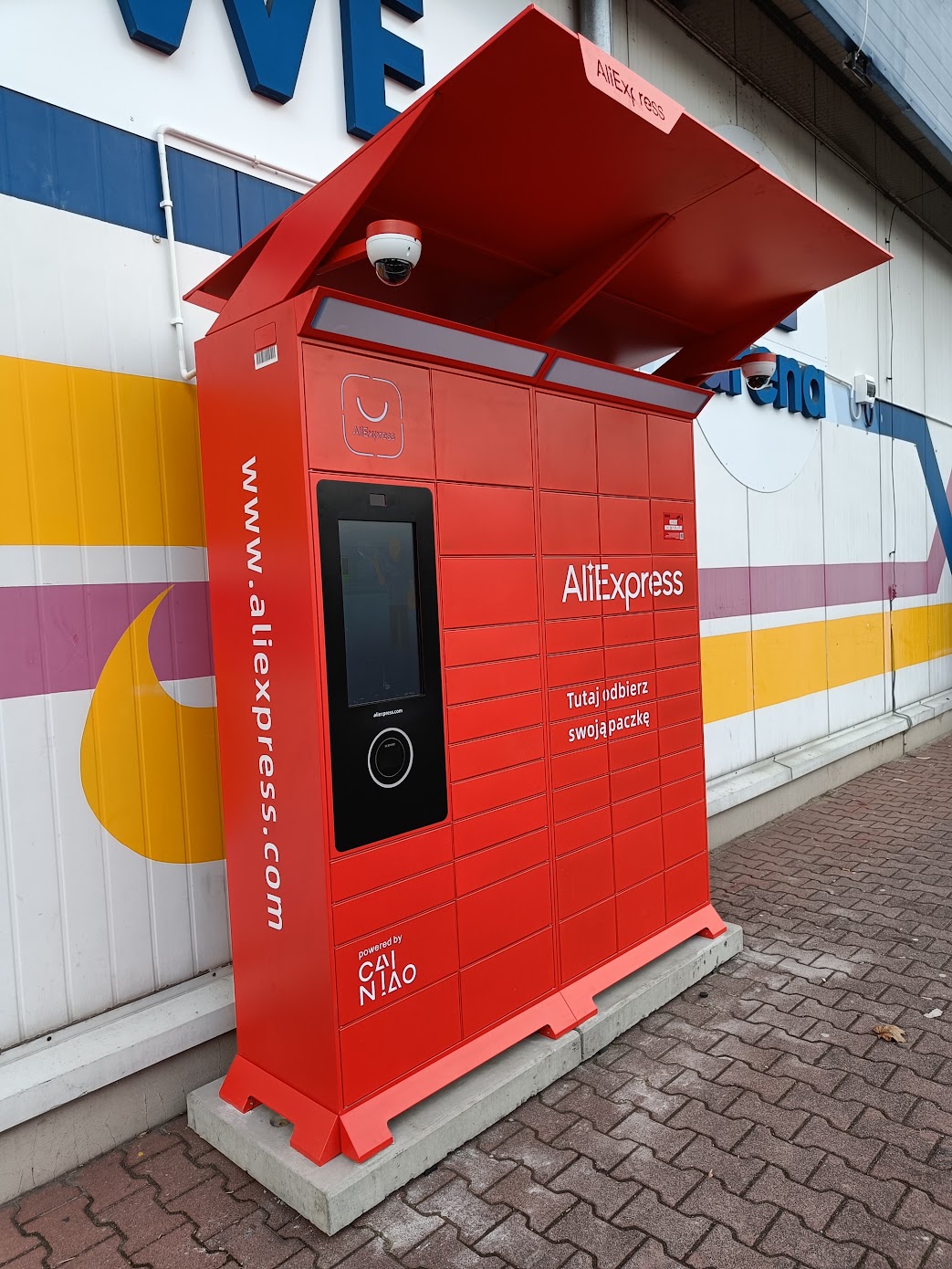
Several operators have quietly explored entry, cooperation or structured partnership models in Europe. Industry discussions indicate that SF Express (Europe) is assessing potential entry options. The development, therefore, represents a market-wide trend rather than the initiative of just one giant player.
What Chinese Entrants Must Get Right, and European Players Can't Ignore
1. Europe and China: The Different Operating Realities That Chinese Entrants Must Take Account Of
Europe differs fundamentally from China. China benefits from high urban density, unified regulation and a single language environment. Route economics are supported by significant city clustering, compressing costs and accelerating scale efficiencies.
Europe is structurally fragmented, with labour frameworks and union dynamics differing by country and consumer expectations varying across markets. Parcel density in major cities such as Paris or Warsaw bears little resemblance to that in peripheral regions of south-eastern Europe. Because density economics are central to last-mile delivery, these contrasts matter. In China, concentration allows scale to translate into efficiency relatively quickly.
In Europe, by contrast, efficiency must be built market by market. The result is greater operational complexity, which heightens risk but also creates opportunity for operators willing to proceed with patience and discipline.
2. Why Integration Is a Competitive Advantage
Integration offers a potential competitive advantage. When marketplace, fulfilment and delivery functions operate within a coherent operational and software architecture, visibility and control improve. Failures can be traced to specific nodes in the chain. Parcel positioning becomes predictive rather than reactive. Route optimisation can be based on observed demand density rather than theoretical modelling.
Such integration strengthens accountability, data ownership and forecasting capability. In cross-border logistics, data constitutes strategic leverage: it informs operations management, return-reduction strategies, seller governance and customer engagement.
3. Reliability Trumps Speed, and Out-of-Home Networks Will Play a Leading Role
Speed of expansion, while important, is secondary to reliability. International expansion efforts frequently falter when rapid rollout is prioritised over operational stability. In Europe’s CEP and postal markets, reputation builds gradually but can deteriorate quickly. A stable operational baseline, aligned with local regulatory and cost structures, is a prerequisite for ambitious service commitments.
Out-of-home (OOH) networks also add further complexity. Europe is comparatively advanced in locker and PUDO adoption.
Over time, hybrid models that dynamically allocate between home delivery, lockers and pickup points based on density, parcel characteristics and consumer behaviour are likely to gain share. Chinese operators have experience managing large-scale locker ecosystems designed to optimise labour utilisation and mitigate urban congestion.
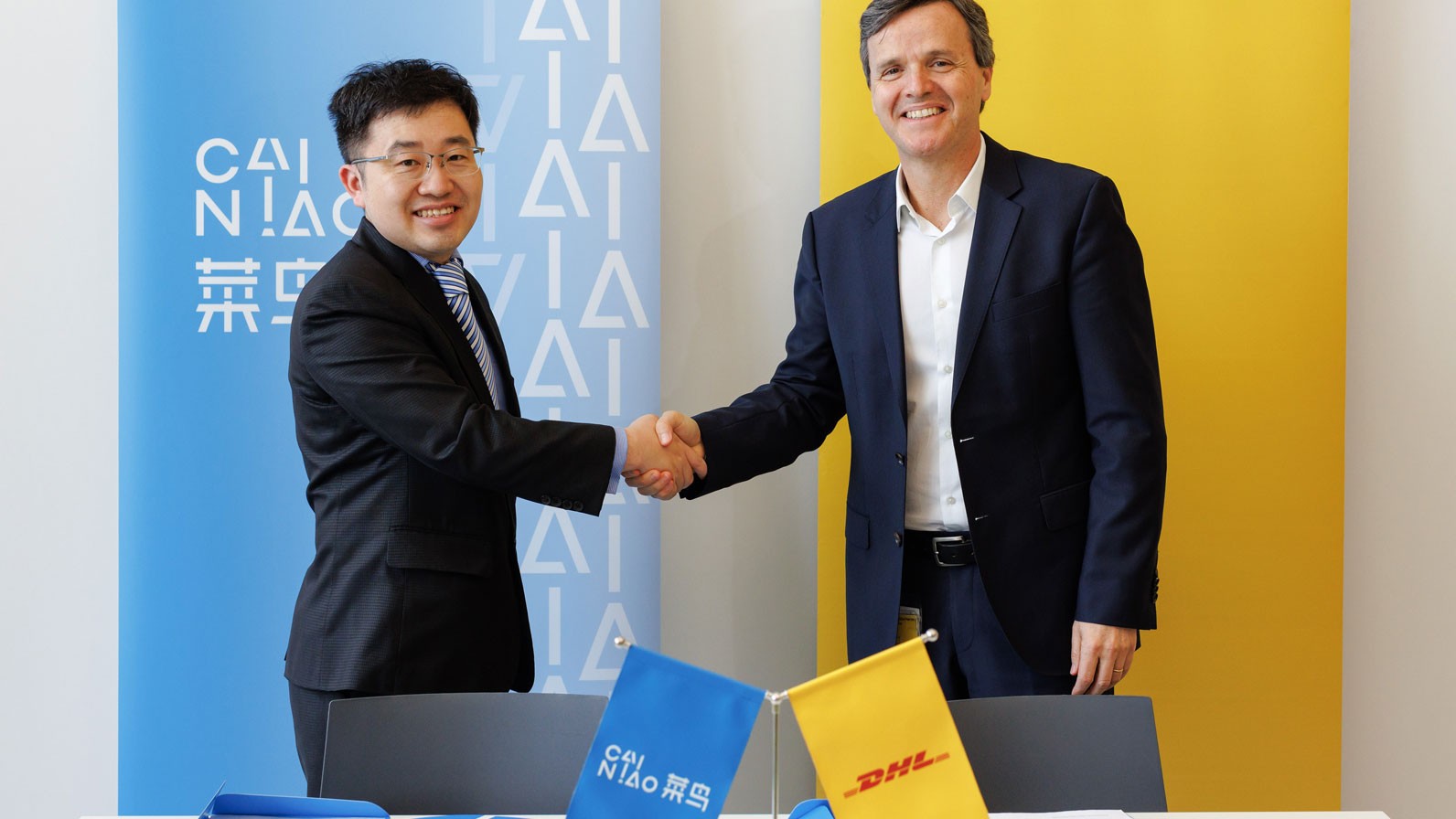
Photo credit: DHL Press Materials
4. Ownership Limits, Regulatory Realities, and the Value of Partnerships
Full Chinese ownership of last-mile infrastructure across Europe appears unlikely. Acquisitions are not always feasible: in some markets, suitable assets are limited; in others, valuations correspond to mature density economics and are commercially demanding. Regulatory scrutiny adds another layer of constraint.
Partnership, therefore, is key, not merely a plan B. Structured partnerships can provide access to local density, regulatory expertise, established networks and customer trust, while reducing capital intensity and aligning volumes with capacity.
However, effective partnerships require more than contractual alignment. They depend on a shared understanding of governance structures, decision-making cadence, capital horizons and expectations regarding data transparency. Chinese operators often adopt long-term, structurally oriented investment perspectives. European carriers frequently operate within shorter margin cycles and under more immediate regulatory constraints. Alignment cannot be assumed; it must be constructed.
Operators that invest in building that alignment may unlock pan-European access, technological leverage and durable strategic positioning. Those that do not risk misreading market signals, underestimating counterpart ambitions or mispricing collaboration. Relationship development is therefore central to successful market entry.
The Next Phase for Europe’s CEP Sector
At Last Mile Experts, considerable effort is being directed towards fostering dialogue and mutual understanding, underscoring the view that the shift underway is structural rather than cyclical.
Europe’s CEP and postal sector is entering a new phase characterised by hybrid ownership models, deeper vertical integration and recalibrated competitive dynamics. Chinese entrants are approaching the market to compete, but in certain cases also to collaborate, depending on the strategic alignment achieved.