
Over the past decade, global parcel carriers have been forced to confront a structural reality that cannot be solved with more aircraft, bigger hubs or faster line haul. The battleground has shifted decisively to the last mile.
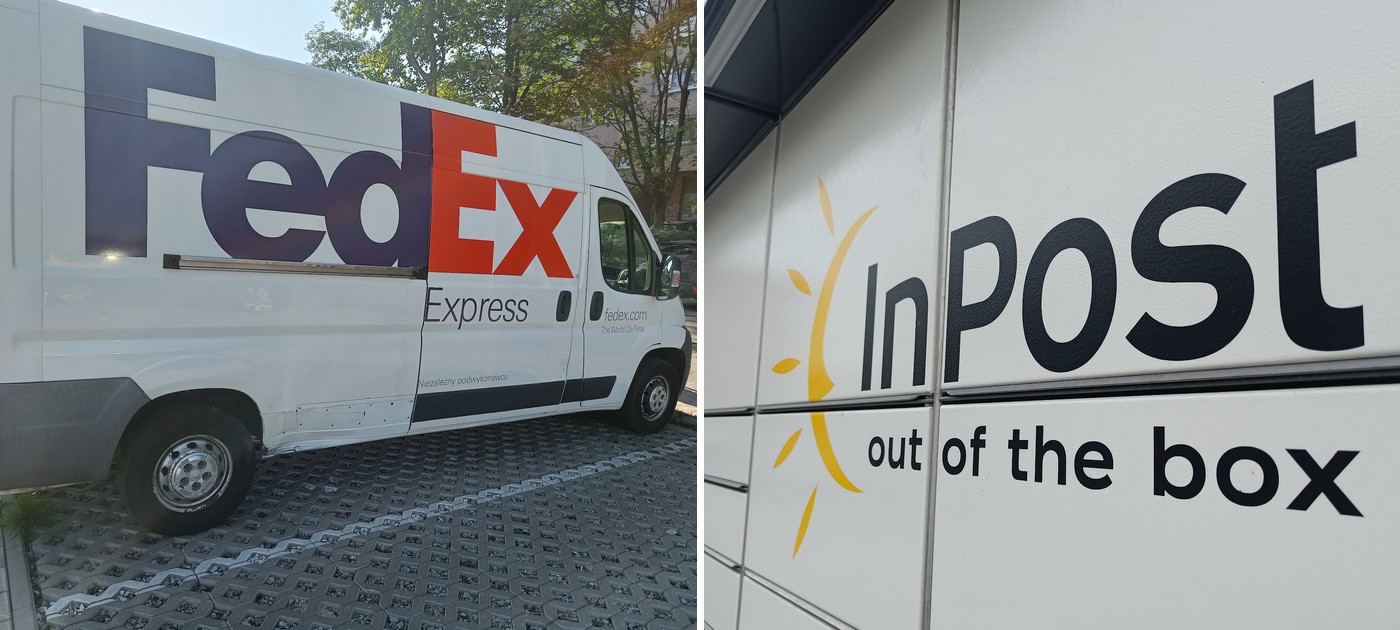
The proposed transaction between FedEx and InPost should be read in this context. What appears to be a European deal is, in fact, a signal of how global operating models are beginning to adapt to consumer-led delivery economics.
A bit of context
At first glance, this transaction can easily be seen as a European story. A strong regional out-of-home player, a private equity consortium, a take-private at a clear premium. Look again, and it becomes something else entirely. This deal is strategically important not just for InPost, but for FedEx as a global organisation. And that is where the real significance lies.
The Real Challenge Was Never Air Or Line Haul
For years, FedEx’s international challenge has not been air capacity, line haul or cross-border reach. It has been the structural shift towards X2C and the final metres to the consumer.
This became painfully clear after the TNT Express acquisition, which combined two B2B centric organisations just as the X2C wave was accelerating. The result was a fundamental mismatch between operating models and the reality of the market.
From Integration To Access Infrastructure
With InPost, FedEx's aim is not to integrate a legacy network, but rather acquire out-of-home know-how and access to infrastructure.
This is because InPost is not just a PUDO or locker operator; it represents a different last-mile logic: a consumer interface, a behavioural habit and a density-driven platform.
The explicit decision to keep both organisations operationally independent while enabling arm’s length commercial cooperation signals that this is not about control, but optionality and innovation.
What Each Party Really Gains
From a strategic perspective, the asset exchange is not necessarily equally balanced. However, the deal will complement both parties as follows:
FedEx will gain:
- a proven, best-in-class out-of-home operating model
- a scalable, capital-efficient last-mile capability
- the ability to connect its global network into InPost’s infrastructure with enhanced local economics
InPost will gain:
- access to a significant international network
- insulation from public market short-termism
- validation of lockers and PUDO networks as core infrastructure rather than a niche solution
Lockers As Infrastructure, Not Optimisation
Out-of-home delivery has historically been treated as an optimisation lever, but the structure of this transaction is yet another reminder of how parcel lockers and PUDO networks are now critical last-mile infrastructure.
Evidence from Poland shows that dense locker networks can drive productivity improvements of up to tenfold while also improving customer experience and first-time delivery rates. This is not just theory either; it has now been operationally proven.
Valuation Versus Optionality
The EUR 15.60 per share valuation provides immediate and certain value and reflects a balanced view when historical trading levels are taken into account.
Strategically, however, the bigger story isn’t really about the short-term price. Instead, it's freedom and flexibility. Going private will give InPost the space to focus on long-term moves, including building density and investing in growth through expansion into new markets.
Why This Matters Far Beyond Europe
Europe is simply the most mature locker market today. The underlying drivers are nonetheless global. Urban density, labour scarcity, sustainability pressure, returns growth and consumer demand for flexibility apply just as strongly in the US and other developed markets.
In this context, InPost is likely to become a blueprint rather than a purely regional asset.
Therefore, this transaction signals a shift in how global integrators think about the last mile. Infrastructure that controls access to consumers is a genuine strategic asset, and the InPost takeover deal suggests that global integrators may finally be catching on to this. For organisations navigating similar structural pressures in the last mile, this transaction offers a useful reference point.
If you would like to discuss the strategic implications of this transaction in more depth or explore how today's evolution of operating models could apply to your organisation, please feel free to contact me directly.
Disclaimer
This article reflects the personal views of the author and is provided for informational purposes only. It does not constitute investment advice, legal advice, or a recommendation to buy or sell any securities. Certain statements may be forward-looking in nature and subject to risks and uncertainties. Past performance and operational outcomes are not guarantees of future results.