
The idea is seductive: open an app, hand over a parcel, and watch it arrive within the hour. Uber and Bolt already move millions of people and meals, so why not packages too? Yet Europe has tested on-demand delivery many times, and the results suggest caution. The service delights customers but struggles to earn money.
On-demand delivery looks powerful because it taps idle driver capacity. Customers like live tracking, predictable ETAs, and simple handover. But the economics are fragile: one parcel per trip, low density, high cost per stop, and weak consumer willingness to pay the full price of immediacy.
By contrast, postal operators and couriers thrive on density. They move millions of parcels through hubs, drop ten to twenty per hour on urban routes, and funnel more than half their volume through lockers or pick up points. That is why incumbents treat on demand as a capability, not a core business.
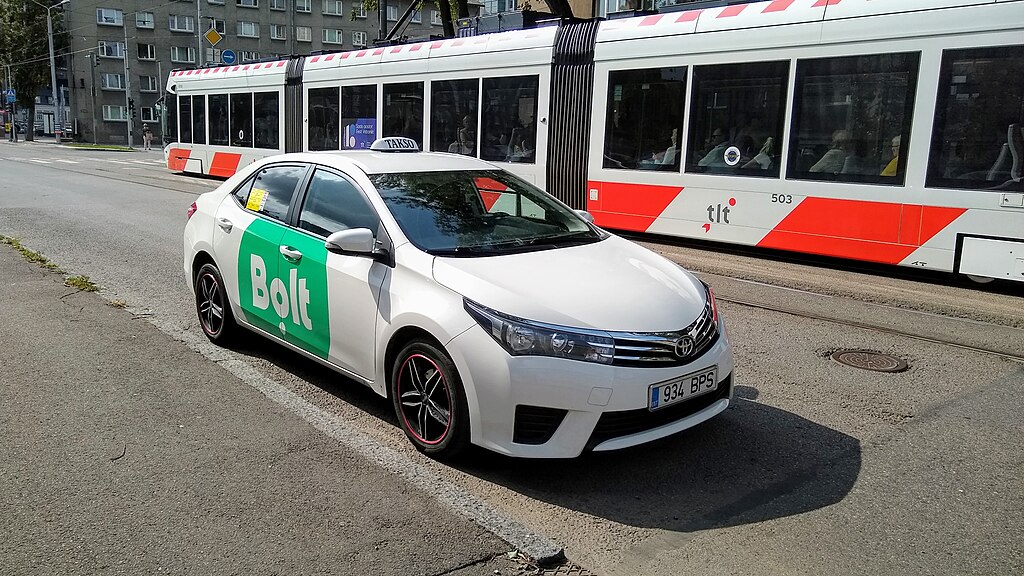
Bolt in Estonia: still a local pilot
Bolt has already shown the model can run inside the EU. In 2020, it launched same-day parcel delivery in Tallinn and Tartu. The model was lean: a cap on weight and value, straightforward point-to-point flow, and real-time tracking. It proved that Bolt can switch on instant delivery in an EU city when demand and regulation align, though it remains a limited local pilot.
La Poste and Stuart: from experiment to divestment
La Poste’s GeoPost bought Stuart in 2017 to add instant capability to DPD and Chronopost. But in 2023 it sold Stuart to investor Mutares after years of losses. Stuart is now restructuring to find a path to profitability. The message is clear: even inside a postal giant, pure on demand struggles to pay its way.
Allegro One: from instant to integrated
Allegro acquired Poland’s Xpress Couriers in 2021, gaining a pure on-demand service. Instead of running it as is, Allegro folded it into One by Allegro and redirected volume into lockers, pick-up points, and scalable next-day services. Instant delivery still exists, but only for select urban cases. This pivot mirrors the wider European trend: buy the capability, but repurpose it toward density and cost efficiency.
eMAG and Sameday: building a full-service carrier
Romania’s Sameday, backed by eMAG, has grown into a regional carrier with a large locker network and the acquisition of Cargus. It started with same day in Romania but evolved into a broad, integrated player. Scale and out-of-home assets matter more than pure immediacy.
DPD UK: a complement, but not a core
DPD UK has added CitySprint and Absolutely to offer same-day. But these operate alongside its profitable nationwide next day business. Same day is positioned as a premium option for key accounts, not the foundation of the network, underlining that the dream of pure instant delivery must be tempered by financial reality.
Quick commerce: a parallel lesson
The retrenchment of Getir in several European markets offers a cautionary parallel. Ultra-fast grocery delivery collided with high costs and weak consumer willingness to pay. Parcel delivery is not groceries, but the underlying problem, speed without density, is the same.
Uber runs Direct for retailers and Courier/Connect for consumer-to-consumer. Services are visible in Paris, Madrid, and Lisbon, with expansion roles advertised in France, Spain, and Portugal. Retailer integrations are the focus, as Uber wants to be the behind-the-scenes, same-day provider for merchants.
Bolt’s Estonian launch shows it can run the same model in Europe. Expect the offer to remain narrow, simple parcels rather than regulated goods, to reduce risk and complexity.
Why pure on demand rarely scales profitably:
- Drop density: traditional networks average ten to twenty stops per hour, on demand averages one
- Network leverage: incumbents spread infrastructure costs across hundreds of millions of parcels, platforms lack that scale
- Product mix: only a small slice of shipments truly need immediacy, the rest are steered into next day and out of home channels where cost per stop is lower
Uber and Bolt will keep winning urban, time critical niches. They raise the bar for tracking, speed, and digital convenience, and retailers will use them to avoid building fleets. Posts and couriers must keep these features in their portfolio.
But the structural core of European delivery remains dense national networks with vast locker and PUDO estates. That is where profitability lies. Evidence is consistent: La Poste divested Stuart, Allegro repurposed X press Couriers, Sameday became a full service carrier, and DPD treats same day as an add on. None of the majors is betting the company on pure instant delivery.
What to watch out for:
- Retailer partnerships are an interesting idea for Uber Direct; if it lands top tier retail integrations, volumes could scale
- Out-of-home tie-ups; if Uber or Bolt can meaningfully connect to such networks, their parcel economics could improve
The Bottom line
Uber and Bolt are reshaping expectations for immediacy, but they are not remaking the economics of parcel delivery. In Europe, the winning model is still clear: national networks optimised for density, out-of-home models to give capacity and lower costs, and a selective instant layer for the few cases where time really is money.
Featured image courtesy of Dmitry G, Public domain, via Wikimedia Commons
